- Home
- AUTHOR INTERVIEWS- CHECK THEM OUT
- Behind the Pages: Helen Winslow Black Discusses her recent novel Songs My Mother Taught Me
Behind the Pages: Helen Winslow Black Discusses her recent novel Songs My Mother Taught Me
- By Norm Goldman
- Published February 24, 2025
- AUTHOR INTERVIEWS- CHECK THEM OUT

 Norm Goldman
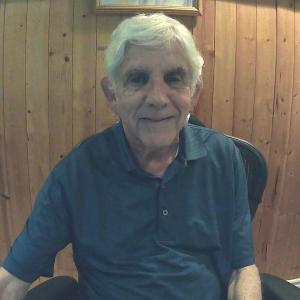
Reviewer & Author Interviewer, Norm Goldman. Norm is the Publisher & Editor of Bookpleasures.com.
He has been reviewing books for the past twenty years after retiring from the legal profession.
To read more about Norm Follow Here
Today, Bookpleasures.com is delighted to welcome Helen Winslow Black, an accomplished author, speaker, and passionate advocate for the prevention of domestic abuse.
Known for her evocative storytelling and deeply relatable characters, Helen garnered critical acclaim with her debut novel, Seven Blackbirds, which not only won the 2021 Firebird Book Award but also introduced readers to the unforgettable character of Kim.
Helen’s commitment to her craft extends beyond her novels—she’s also the voice behind the audiobook version of Seven Blackbirds and has penned a collection of humorous essays on her website.
A proud Midwesterner who now calls Portland, Oregon home, Helen's life reflects her adventurous spirit. Motherhood is core to her mission.
She's raised five fantasstic human beings to adulthood and now, in her quest for new challenges and adventures, enjoys summiting Colorado Fourteeners and traveling with her husband, especially to Australia and New Zealand.
As a mother of five, Helen brings her unique experiences and perspectives into her writing, capturing the beauty and complexity of human relationships.
Norm: Songs My Mother Taught Me explores the complexity of marriage and family relationships. What inspired you to delve into these themes in your novel?
Helen: First of all,
thanks so much for having this conversation, Norm, and I love your
thoughtful questions.

You know, there’s a scene that appears in both of my books so far that kind of sums that up.
It’s something Kim’s mother, Bobbie, muses to her when she’s only a teenager: “The past is just the present of another day.”
I’ve always been intrigued by how we carry our childhood experiences, our original family dynamic, along with us into our adulthood.
Even more fascinating is how the impact of that on our own choices and actions in life can differ so widely even if the experiences, or the people, seem so similar on the surface. It’s like turning an invisible kaleidoscope.
Why is that? It fascinates me. I probably could have gotten it out of my system by majoring in psychology in college, but I didn’t, so here we are.
Norm: How did the character of Kim evolve from your first book, Seven Blackbirds, to her journey in Songs My Mother Taught Me?

Helen: At the end of “Seven Blackbirds,” Kim is standing on the threshold of a new life. She’s earned some wisdom, but she’s still young.
The person she runs off into the sunset with is herself; I left the book open-ended because I wanted to see what would happen next. She moves on to a happy life partnership with someone she’s really in tune with.
She calls it her “real” marriage, but in a way, that makes working out problems, when they arise, that much more difficult, because you’re invested.
On the other hand, the confidence she gains from that successful marriage is a large part of what helps her work through those difficulties.
I’d also like to mention that she’s on a big learning curve about family. Over time, and several geographical moves, she comes to see the importance of being close to extended family for physical and emotional support—that latter is something that comes with greater confidence, after you pass through the “I have to do it myself” phase. Both of those things represent evolving maturity.
Norm: The novel tackles difficult topics such as secrets, betrayal, and emotional scars. How did you approach writing these heavy subjects in a way that felt authentic to the characters and their experiences?
Helen: Every family has its own shared history, conversational references, secret language.
When you develop that over time, and establish it, you can bring it lightly to bear on not just the fun moments but the difficult ones, and that lends authenticity.
For example, Kim and her sister have a childhood memory of standing on the train tracks in Glencoe holding hands, looking north to Milwaukee, south to downtown Chicago.
It comes up in both books so far, and toward the end of “Songs” it reappears in a gorgeous, gorgeous scene where they are reacting to a conversation with their mother where she essentially blesses them as adults, allowing them to make that “tremendous shift into a new key.”
This shared memory is folded into their experience of this moment in a way that absolutely rings the bell of emotional truth and does it without being too “heavy.”
Being able to layer this stuff in is super helpful in that regard. You can do this when you have characters and moments and scenes that appear in multiple books.
I have two so far, there will be three. It’s kind of like having your own Yoknapatawpha County without the excruciatingly difficult stream-of-consciousness-without-punctuation aspect of Faulkner’s writing.
He can do that because he’s a genius. I ain’t.
Norm: Kim’s relationship with her second husband, John, is marked by trust, but when secrets begin to unravel, the dynamics shift. What was the most challenging part of portraying the shift in their relationship?
Helen: I have to say that the most challenging part of portraying that was writing the chapter that precurses the shift and lays the foundation for it.
Kim and her husband are driving home after a difficult business-social event, and as they decompress, emotional issues Kim hadn’t necessarily bargained for come to the fore.
In the event, she and John are able to navigate their way around the tip of this iceberg, which is a testament to the solidity of their marriage, but those ten pages of unfolding conversation on the drive home, and then sitting in the parked car in their driveway, were the most challenging to write because they were very complicated as well as heart wrenching, which you can’t overdo.
I had to balance on the head of a pin on that one.
Norm: Music plays a significant role in Kim’s story, connecting her to her mother and providing solace. Can you talk about the role of music in your own life and how it influenced your writing?
Helen: I grew up as a classical musician: played in three orchestras in high school and did string quartet on Saturdays on top of that, sang in the church choir, with three rehearsals a week, and in college continued with choral groups as well as piano and harpsichord.
That kind of immersion absolutely carries over into my writing. Whether it’s straight narrative or dialogue, it gives me a keen sense of rhythm and balance.
I understand that the rests are just as important as the notes themselves. I can grasp structure in the abstract. I understand harmonic depth and how to create that on paper. I actually see my writing as music.
Norm: Kim is a woman of many talents, balancing her career as a lawyer with raising children. How did you ensure her character felt grounded in reality while showcasing her achievements?
Helen: By showing the push-and-pull of it, the conflict and her awareness of the conflict.
By not leaving any of it out: the mistakes, the moments of uncertainty and guilt, of conflict with her own mother or her children or her husband—or herself—as she tries to balance her different roles.
Sometimes you can do this through humor, sometimes through more serious reflective passages. But it’s something we all go through, so that’s very real.
Norm: Family dynamics are crucial in Songs My Mother Taught Me, especially the relationship between Kim, her mother, and her sister.
How did you develop these characters to reflect the nuances of unconditional love and misunderstanding?
Helen: Here I think humor is key. You really believe that Kim and Karen would walk across broken glass for each other and for their mother even if they do tease her about traveling with tapioca packets in her luggage.
You can’t fake humor like that and it bespeaks a solid relationship. Even the way they slip in and out of little arguments using humor, shows that.
They can needle each other and engage in conflict but are still one hundred percent secure in the relationship.
That’s almost the definition of unconditional love, isn’t it? None of this can you fake. You can’t fake the humor. It brings home the long-standing nature of this familiarity, and you appreciate that.
So, when the going gets tough and the tough have those tough conversations, they’re totally believable because you’ve laid the groundwork.
Norm: The book takes place over several years. How did you handle the passage of time in the story, and how did you keep the characters’ experiences grounded in the reality of their evolving lives?
Helen: Although I don’t specify years—this is fiction, after all—I had to keep pace with almost fifteen years of social, cultural and economic trends occurring around these families.
And as it happens there is one unmistakable actual historical event that transpires during the course of the book, so I used that as a chronological landmark and then took a giant sheet of butcher paper and made a timeline labelling everything with actual/made-up dates just so I didn’t make any mistakes, like calling a third-grader a fourth-grader or having somebody playing with a dog that had died the previous year.
I also had a lot of technology to keep track of too. At the beginning of the book, heads swivel in a diner when Kim’s cell phone rings because it was unusual for people to have them.
By the end of the book, even children are accustomed to having cell phones sutured to their palms. You see the passage of time through details like this as well.
Norm: The book explores the tension between protecting one’s family and confronting painful truths. What message do you hope readers take away from this dilemma?
Helen: On your own journey, you have to confront painful truths because the only way past something is through it.
But when you’re facilitating a child’s passage through a traumatic life event, you have to tailor that to the child’s age, developmental level and ability to understand, at the given time.
Act constructively in their best interests. To do otherwise is, unfortunately, the epitome of selfishness. It’s not about you, it’s about the kid.
Norm: Some secondary characters, like Kim’s neighbor Bill, provide moments of emotional depth but could benefit from further development.
Can you share why you chose to focus more on the central family dynamics rather than expanding on these characters?
Helen: Can I blame it on my editor? Love you, Betsy! I had to cut out so much. I’m just overflowing with characters and scenes, but it’s not like it’s the last book I’ll ever write and focus is important.
I’m so fond of Bill, and I comfort myself with the fact that he’s going to be bigger in the next book.
He’s going to have a wonderful relationship with Grace as she moves through childhood and develops her own career as a professional musician, a relationship which is hinted at in “Songs” but which I’ll expand on. If you know Willa Cather’s “Song of the Lark,” he’s going to be Ray to her Thea. I had no idea I was doing that until I saw I’d done it.
I was just really trying to write about that neat kind of relationship you can have with someone who’s as old as your parents but isn’t your parent. It’s very nourishing and freeing, especially in adolescence.
Norm: Where can our readers find out more about you and Songs My Mother Taught Me?
Helen: MY WEBSITE. I post links there to signings, reviews and interviews and where and when you can catch me on TV or radio or podcast or at least watch a replay.
I’ll also do that on a Facebook author page which should be up and running…um…yesterday. My publicist told me to get cracking on that but I reminded him time is non-linear, so in some sense, it’s already happened.
Norm: What is next for Helen Winslow Black?
Helen: I’m recording the audiobook of “Songs” soon so that should be available towards the end of the year.
Remember that if you have friends who like audiobooks. My humor collection “Eat Pray Drive” should come out early next year, and I’m working on the third book in this non-linear trilogy, the one that focuses on the daughter Grace.
I’m a very slow writer. So while you’re waiting, I have a non-fiction humor collection to keep you amused. It’s called “Eat Pray Drive” and I hope to bring it out early next year.
Norm: As we conclude our interview, ultimately, Songs My Mother Taught Me ends on a note of hope. What do you believe is the novel’s ultimate message about resilience, love, and healing?
Grace: Courage will get you everywhere. Including into a healthy life of your own creation.
To Read Norm's review of Songs My Mother Taught Me FOLLOW HERE