Author: Pablo Stamati
ASIN: B0HH8D199F
Publisher: Independently published
ISBN: 979-8170664191
We live in an era where headlines routinely broadcast billions of dollars lost to online fraud and cyber heists.
Yet, as cybersecurity experts often point out, the most dangerous vulnerability isn’t sitting inside our computer hardware—it’s sitting right between our ears. In an online landscape dominated by AI voice cloning and high-pressure digital scams, everyday users are left feeling anxious and overwhelmed.
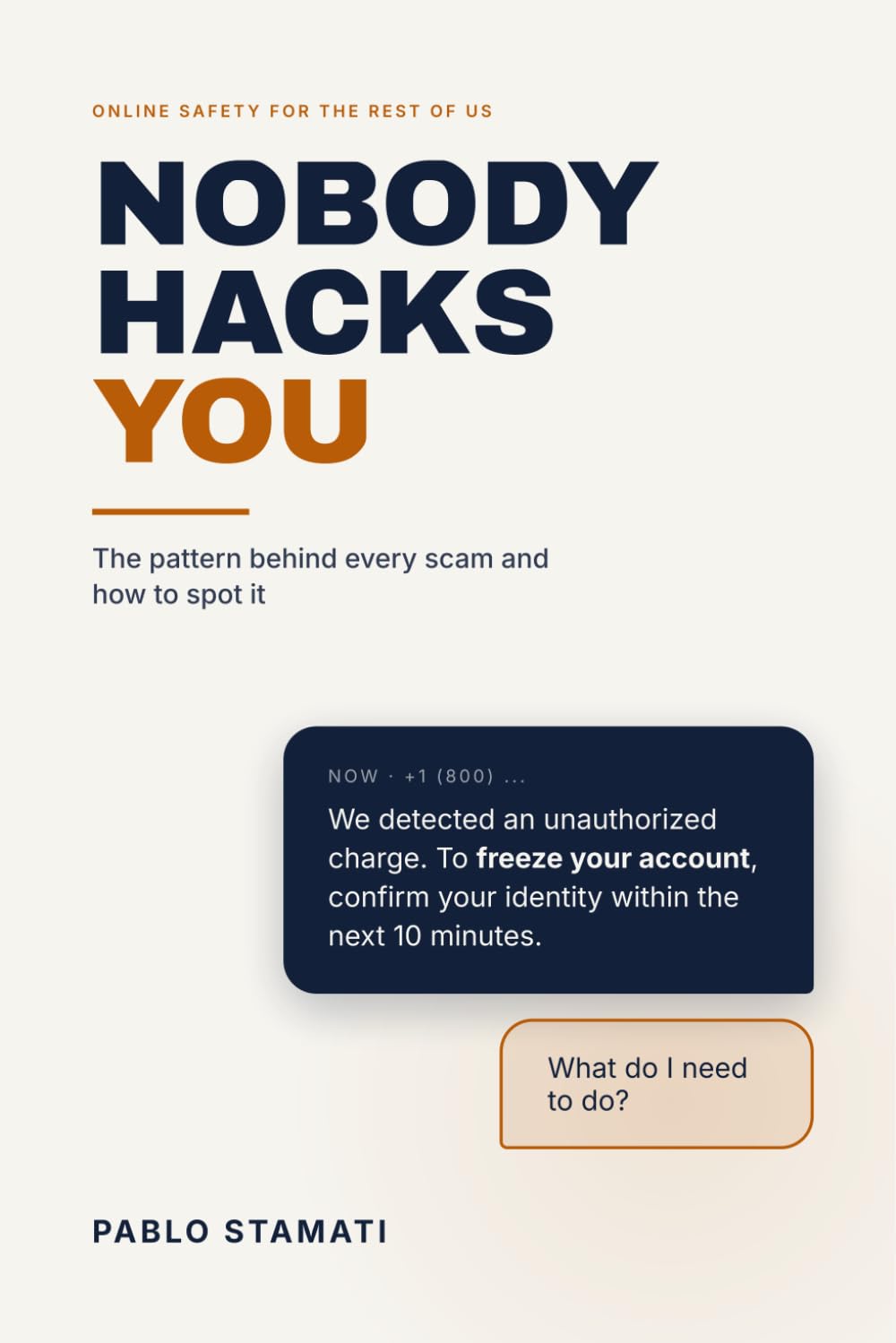
For those who find technical language daunting and feel paralyzed by constant digital threats, Pablo Stamati’s book, Nobody Hacks You: The Pattern Behind Every Scam and How to Spot It, serves as a timely antidote.
Spanning twenty-one digestible chapters, Stamati breaks down complex ideas about online safety into straightforward, practical advice that anyone can understand.
Drawing upon helpful information from government sources and research into human behavior, he bypasses dense technical jargon to show how scams actually work, offering everyday strategies to protect our money, personal information, and privacy.
One of the most eye-opening insights in the book is that most scammers don’t actually hack into computers directly; rather, they trick people into making poor decisions.
Stamati emphasizes that falling victim to fraud is a matter of how our brains are hardwired and how we react emotionally under pressure, rather than any reflection on a person’s intelligence.
While the statistics surrounding modern social media fraud, sophisticated phishing, and tricky impersonation schemes can be deeply disheartening, Stamati actively works to alleviate that fear. Instead of paralyzing readers with panic, he equips them with the concrete tools they need to understand, anticipate, and combat these threats.
What truly sets this book apart is its refreshing, boots-on-the-ground practicality. Instead of overwhelming you with exhaustive, anxiety-inducing to-do lists, each chapter helps you decode the psychological tricks scammers rely on.
The goal is to foster a healthy mindset—one that is alert, aware, and cautious without tipping into exhausting paranoia.
From cutting-edge dangers like AI voice cloning to classic financial traps, Stamati illustrates how these schemes exploit our most admirable human traits, such as trust, kindness, a desire to help others, and a manufactured sense of urgency.
Stamati’s writing remains engaging, compassionate, and respectful throughout.
He addresses readers as intelligent individuals, making complex cyber mechanics easy to digest through a blend of hard factual insights and relatable, real-world stories that make the lessons stick long after you close the book.
Furthermore, Nobody Hacks You goes beyond individual defense by encouraging the growth of a broader culture of awareness.
Every chapter wraps up with simple, actionable steps that can culminate in a proactive “Lockdown Weekend” plan to thoroughly secure your devices, passwords, and online accounts.
Beyond personal protection, this knowledge empowers readers to have positive, constructive conversations with more vulnerable family members and friends—such as elderly relatives who are often targeted by malicious actors—thereby spreading a safety net even further into our communities.
Ultimately, Nobody Hacks You is an essential, must-read guide for anyone navigating digital platforms in the modern world.
By following Stamati’s guidance, readers not only learn to recognize warning signs before it is too late, but they also gain a deeper, calming understanding of the psychological mechanics that drive online scams, transforming digital dread into confident cyber-resilience.
As an Amazon Associate we earn from qualifying purchases.