Ever feel like the daily news about artificial intelligence is giving you a heart attack? You’re definitely not alone.
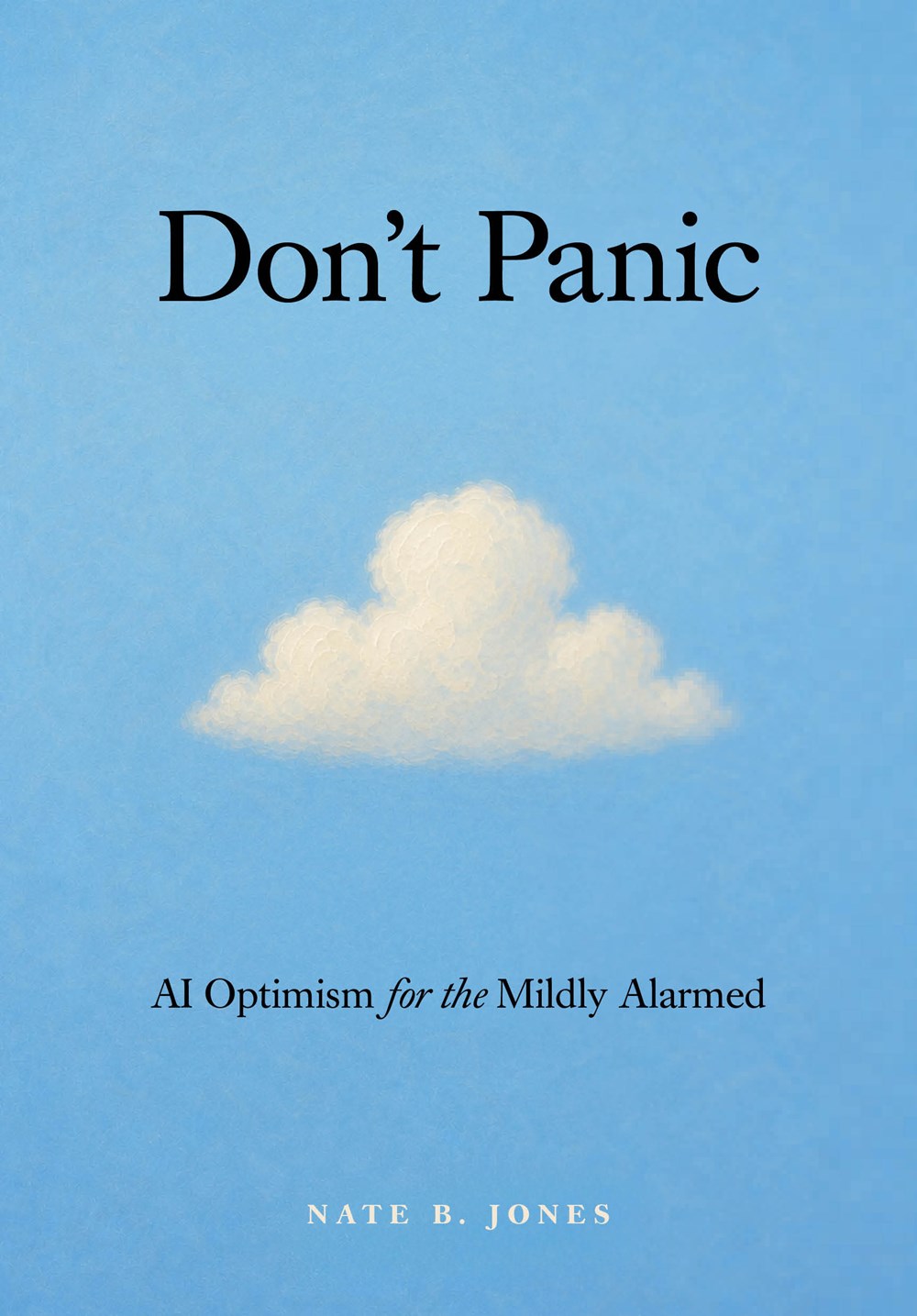
Author: Neil B. Jones
Publisher : Sasquatch Books
Publication date : March 16 2027
ISBN-10: 1632176726
With all the wild headlines about super intelligence running amok and warnings that robots are coming for our jobs, it’s tough to know what to believe.
That’s why Neil B. Jones’s new book, Don’t Panic: AI Optimism for the Mildly Alarmed, really stands out.
It’s a straightforward and reassuring guide in a sea of confusing noise.
If you’re looking for a heavy academic textbook packed with jargon, this isn’t it.
Jones keeps it real and relatable, writing for everyday folks like us.
Instead of talking down to readers or trying to scare them, he’s like a friend sitting across from you with a cup of coffee, breaking down what’s actually happening with AI in a way that makes you feel a lot better about it. At its core, the book shares a comforting truth: AI isn’t some alien overlord plotting our demise.
It doesn’t want anything, doesn’t feel emotions, and definitely isn’t alive. It’s just a super-fast pattern-matching machine built on the data humans feed it.
By explaining how these systems actually work, Jones helps to deflate the sci-fi hype that causes so much unnecessary fear.
That said, the book isn’t all sunshine and rainbows. Jones doesn’t ignore the real issues we face.
He gets right into it, discussing things like biased algorithms, privacy concerns, and the anxiety around job changes.
His take is refreshingly practical: these problems are human-made and, more importantly, can be fixed by humans. Instead of panicking, he advocates for sensible rules and ethical design, along with some common sense, to keep tech companies in check.
This approach makes you feel understood and hopeful about finding solutions. On the bright side, Jones also points out how, when guided the right way, AI can speed up medical breakthroughs, improve access to information, and take on repetitive tasks, showing us that there’s real potential for positive change.
In conclusion, while I agree with a lot of what Jones says about the potential of AI technologies, it’s also important to keep in mind the other side of the coin.
Oversimplifying risks can lead us to miss complex issues, and we can’t overlook things like biased algorithms and job displacement.
Plus, while a hopeful narrative about AI is uplifting, it should go hand-in-hand with a proactive approach to tackling urgent ethical concerns so we don’t end up complacent.
This balanced perspective is key to making sure we enjoy the benefits of AI while keeping an eye on its risks.