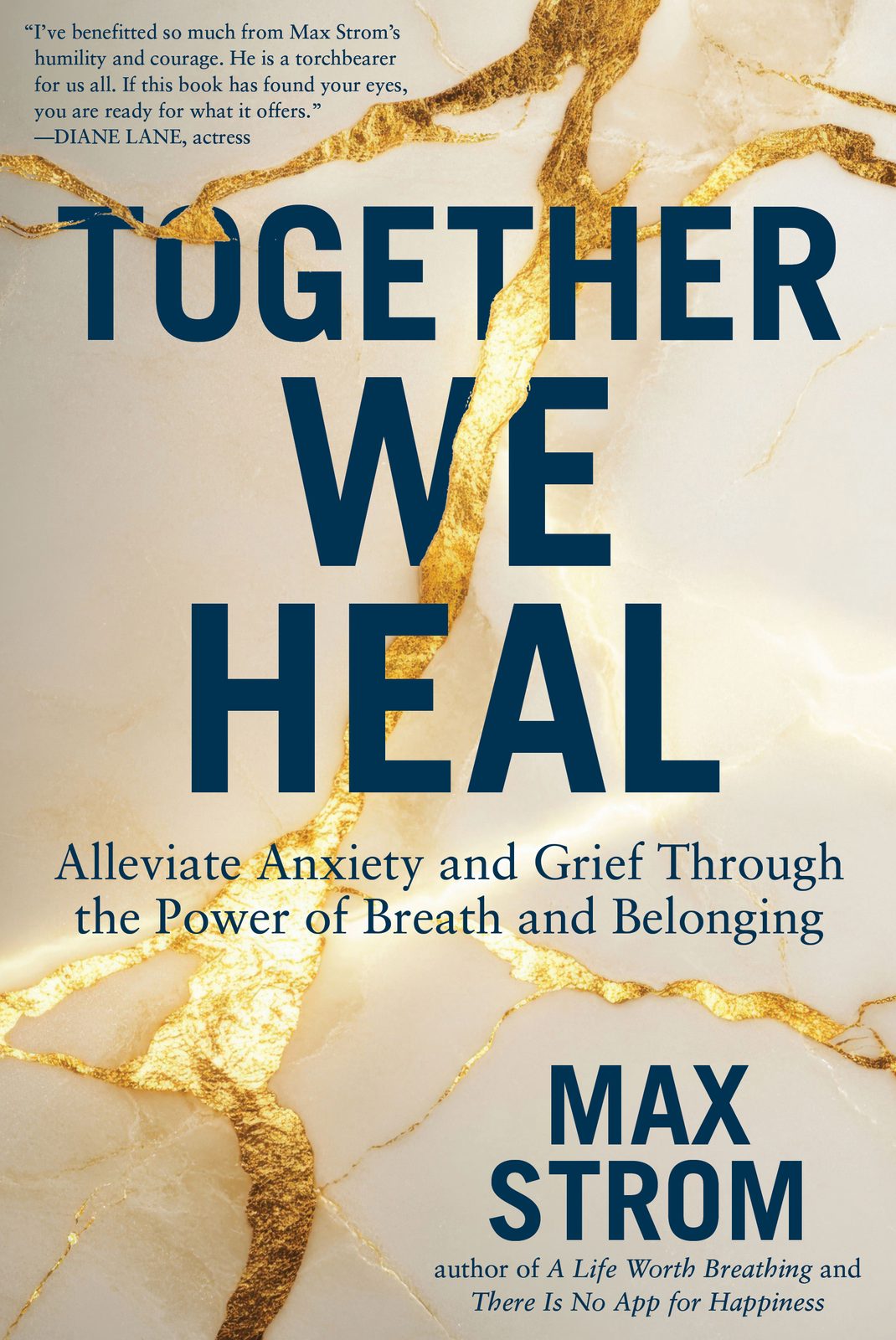
Bookpleasures.com welcomes David Gaines, a social enterprise leader and author of award-winning books on systemic change, to inspire our audience.
Long active in the social enterprise movement, David writes and speaks on conscious capitalism and the stakeholder economy, sharing practical ways everyday choices can foster systemic change and help audiences see tangible impact.
His work is grounded in the conviction that any business can be a force for good, showing audiences that small decisions can lead to systemic change and inspiring hope and a sense of agency.

Today we will discuss his latest tome, Why We Buy and Why It Matters: Small Choices, Big Impact.
Norm: Good day David and thanks for taking part in our interview.
When you’re living paycheck to paycheck, buying eco-friendly or organic stuff can feel completely out of reach.
How can people align their spending with their values without breaking the bank?
Could you share specific, affordable strategies—like choosing seasonal produce or shopping at local markets—that make mindful spending more accessible?
Also, how can we use that old-school envelope method to make our money habits more intentional?
David: Several years ago, I was giving a coffee roasting tour to a group of first-year teachers, and we got to talking about ethical sourcing.
We were talking about how buying coffee that pays producers a living wage can change a family’s whole future and how more money for the coffee means kids in school instead of working the harvest.
Education, generation after generation. As I spoke, I watched the room deflate as everyone’s shoulders slumped. Thankfully, I recognised what was happening.
These were first-year teachers on tight budgets, people who had devoted their lives to kids, and I’d just made them feel they couldn’t be part of a good story because they couldn’t spend eighty dollars a month on coffee.
The tension was real. They wanted in, and they thought the door had a price tag they couldn’t pay.

I decided to step into the tension, and what came out became one of the book’s most important ideas. I said, “Maybe it isn’t about buying more. Maybe it’s about savoring more.”
Here’s what I mean, concretely. A serving of coffee is four ounces globally, six in the US. So a twelve-ounce “small” at a chain is really two to three servings.
We’re not really drinking coffee to enjoy at that point, though we do get some enjoyment from it. We’re drinking it to wake us up and start the day.
But if you slow down and actually savor it, you can buy a better, more ethical product and consume less of it. Then the budget calculus changes. The same is true of almost everything.
Do we need a closet full of clothes, or just seven shirts we genuinely love — which happen to be better made, longer lasting, worn more often because we reach for them first?
Savoring more means consuming less, and consuming less is what makes the better choice affordable.
What is really fascinating is that there’s another hidden gift inside that. Savoring forces us to slow down.
Our whole society is built on speed. Everyone’s busy, everyone’s rushing. But our attention is something we consume too, maybe the most precious thing we consume.
When you actually taste the coffee in your cup instead of drinking quickly on the way out the door, you’re not just spending your money more wisely, you’re spending your attention more wisely.
So this way of living gives you back two things at once: your budget and your presence.
Once you’re in that mindset, the practical pieces fall into place. Buy seasonal produce. It’s cheaper and better precisely because it isn’t being shipped across the planet out of season.
Shop your local farmers market, where your dollar skips the middlemen and lands closer to the person who grew the food.
Buy secondhand both to lower costs and to keep usable items out of the landfill. Buy less, but better.
Norm: You mention a link between our super-extractive economy and the loneliness epidemic we’re seeing today—how does feeling isolated actually push us to buy more physical stuff?
Could you also give examples of simple activities, like sharing a meal with friends or neighbors, that can help rebuild social bonds and create a sense of belonging in everyday life?
David: For me, the root of this is a question about what actually makes us happy, and a lie we’ve been told about where to find it.
The classic marketing philosophy is to convince you that your life is incomplete, unfulfilled, and not quite enough until you buy the product. Watch almost any commercial and you’ll see the formula.
A visibly happy person is holding the thing. The car, the beverage, the gadget. The message underneath is always the same: happiness is one purchase away.
The challenge is that it isn’t entirely a lie, because that purchase does give us a real hit of dopamine. So we’re not foolish for falling for it, but we’re being sold a counterfeit of something we genuinely need.
When you actually unpack what makes people happy, it isn’t the thing. In the book I point to the World Happiness Report, the big annual study, which found that the happiest people were the ones sharing meals with others.
The peak was around thirteen shared moments a week. Across breakfast, lunch, and dinner, that’s thirteen out of a possible twenty-one, plus those in-between moments like an afternoon coffee.
For comparison, Americans average just under eight. The single clearest predictor of happiness isn’t wealth or possessions, rather it’s how often you sit down at a table with other people.
So you can see the trap. We feel the ache — which is really an ache for connection — and the economy is standing right there, ready to sell us a product that promises to fill it.
We buy the thing instead of calling the friend. And the thing never quite works, so we feel the ache again, and we buy again.
Isolation turns out to be very good for business. A person who feels whole and connected is a harder sell.
All this is to say that purchases are not inherently bad. A major point of the book is to reframe that purchases are sacred human exchanges. But the purchases alone cannot fulfill our need for connections.
For that, we simply need to share more meals. It’s to have the neighbors over, even when the house isn’t perfect. Or lingering at the table instead of rushing off.
Norm: Aside from our actual wallet budget, you talk about having an ‘attention budget.’
How do algorithms and the news cycle intentionally use fear and outrage to make us buy more?
Could you suggest practical steps—like setting app time limits, turning off notifications, or scheduling digital detox periods—that families can implement to reduce digital noise and make more mindful choices?
David: I love this question, because it stretches the whole idea of the book.
We talk about consumption in terms of money, but money is just the most obvious form.
We also consume time and attention, and both are finite. You get one day’s worth, and you never get it back.
What we’ve learned about the internet is that when a product is free, you are the product.
Your attention is what’s being bought and sold. The algorithms serving you content aren’t optimizing for your wellbeing.
They’re optimizing for engagement, and nothing holds our eyes like fear and outrage. We’re wired to watch for threats, so the machine learns to feed us threats.
And that’s where it turns into buying, because a frightened, never-quite-enough person is a far better customer.
An anxious mind is wide open to the promise that the right purchase will finally make you safe and complete.
It’s the same trap, only now it’s running on your nervous system, all day, through the devices in our pockets.
Which is why it’s helpful to think of it as an attention budget. Right now, most of it is spent for you — extracted without your consent, a few seconds at a time, until the day is gone.
Reclaiming your attention is the same act as reclaiming your spending. You get to decide, on purpose, where it goes.
The steps are relatively simple, though not as easy as they sound (at least for me!) as I work them into my own life.
Turning off notifications, setting limits on apps, and scheduling real screen-free time. One of the most impactful practices for me has been to make meals phone-free. Especially as we now know the connection between happiness and shared meals, the table is where connection happens.
And with kids, I think it’s important to model all of this as well. They won’t do what we say about screens.
They’ll do what they catch us doing. I want my kids to “catch me” putting my phone down, on purpose, to be fully present with them.
Norm: One-click shopping and modern tech were supposed to give us more free time, but instead, we feel busier and more exhausted.
Why do these conveniences eat up our time instead of saving it? Can you share one or two practical speed bumps—like setting screen limits or taking digital breaks—to help us slow down mindless shopping and digital overload?
David: First, I want to be fair to convenience, because I’m not against it.
My family uses online grocery delivery, and honestly it’s been a game changer for our weekly schedule.
Conveniences aren’t good or bad — they’re just convenient. The question is what we do with the time they give back.
The challenge we wrestle with is the moment a convenience frees up an hour, we almost automatically fill it with more.
More errands, more commitments, more stuff. We rarely let the freed-up time just stay free and present with the people we love.
I do see convenience offering a gift of more time, but we too often fill it with more of everything.
There’s also a harder truth underneath this that I don’t want to skip. For a lot of people, the busyness isn’t a choice at all.
The cost of living has outpaced wages, and many families feel genuinely squeezed. They find themselves working more hours just to make ends meet.
You can’t tell someone working a second job to simply “protect their time.” The large narrative is often that it’s a personal failing, but I think it’s the same extractive pressure the whole book is about, now showing up in the family calendar.
Which brings me to why I love the idea of a speed bump.
One-click shopping is engineered to remove all the friction between an impulse and a purchase — to erase the pause where you might’ve asked, “do I actually need this?”
So the fix is to put a little friction back, on purpose. Take your saved card off the account, so buying means getting up and finding your wallet.
Give yourself a rule: anything nonessential sits in the cart for twenty-four hours before you’re allowed to buy it. That pause is where your values get a chance to speak before your impulse does.
More often than not, the thing you were sure you needed quietly loses its grip overnight.
Norm: You point out that if just 3.5% of a population shifts their habits, it can spark massive, unstoppable change.
For someone who feels like a tiny drop in a giant ocean, how can picturing that 3.5% threshold motivate them?
David: Let me answer this the way I often do when I’m speaking to a room. I’ll hold up a single sheet of paper and ask, “does it really matter if I recycle this one piece of paper?” The honest answer is both no and yes.
No, because on its own it’s almost nothing. It truly is a drop in the ocean. But yes, for a few reasons that I think change everything.
The first is that small actions seed big ones. If I commit to recycling one sheet of paper a day, that small habit makes me more conscious of the next thing, and the next: what else I use, what else I waste. Small habits grow into bigger ones.
The second is that we have to stop equating small with unimportant. That drop is a real drop. Small just means small. Big and small can both be important; one is simply larger than the other.
The third reason is the heart of the whole book: interconnectedness. That single sheet is never really alone.
There are about 330 million people in the US. If each of us recycled just one more sheet a day, or skipped one sheet by using a tablet instead, it would add up to roughly 40,000 trees a day, or around 14 million trees a year.
And planting trees is one of the most effective things we can do for the climate. So picture a “recycle one sheet a day” habit paired with a tree-planting effort, all growing out of a gesture that felt like nothing.
That’s what interconnectedness means. Your drop joins every other drop, and together they make an ocean.
This is exactly why that 3.5% number matters so much.
The political scientist Erica Chenoweth studied resistance movements across the last century and found something remarkable: no movement that mobilized at least 3.5% of a population ever failed to bring about change.
And 3.5% who are visibly committed usually represent the tip of a much larger iceberg of quiet support.
So if you feel like one drop, here’s the way to look at it differently. You were never being asked to be the whole ocean.
You don’t need to convince everyone. You need a committed few, and that few is reachable. Be one of them, visibly, and talk about it, so your drop helps pull in the next.
That’s not a drop lost in the ocean. That’s a drop that’s part of the ocean. And that’s the whole point.
Norm: Why do you suggest starting this conscious-buying journey with food instead of clothes or electronics?
Also, for a family on a tight budget who can’t swing pricey organic groceries, what’s one real, down-to-earth way they can still support the local food scene?
David: Food is where I always tell people to start, for a few reasons that stack on top of each other.
The first is practical: food is a consumable. We buy it over and over and over again.
So if you do the research once — find one producer or one brand you truly love and trust to be ethical — that single bit of effort pays off on repeat, every week, for years.
You need to do the investigating work once, but then the good choice becomes automatic.
The second is that food connects us to each other more intimately than almost anything. Again, it’s the shared table, the meal, and the belonging we’ve been talking about this whole conversation.
And the third reason is that food also connects us to the earth. Your food comes from soil, from plants, from animals, from the whole living web of nature.
So food carries both kinds of interdependence at once — to people, and to the planet. That’s why it’s the richest place to begin.
Now, on a tight budget, I want to be careful, because “eat ethically” too often gets heard as “buy everything organic,” and that’s not what I’m saying.
Not every farmers market is organic, and there are healthy debates about whether organic is even always the most sustainable choice.
So I’s not asking anyone to overhaul their whole food budget. I’m asking you to change one thing. Maybe it’s just the one food you love the most.
A personal example is when I first started buying meat from a local CSA, I noticed immediately how much more flavor it had — richer, deeper.
And because it was so flavorful, I found I actually ate less of it. So the better choice didn’t wreck the budget. I found that the quality added a different value.
That’s part of the nuance of food too. I think it’s less about organic-and-expensive and more about connecting to the person who produced it, to the earth it came from, and to the people you share it with.
Norm: You warn against “purity culture”—the trap of thinking companies or we have to be absolute perfectionists to do good.
How has that “perfect is the enemy of the good” mindset hurt past movements, and how can we give ourselves (and businesses) some grace when money or time forces us to make imperfect choices?
David: Purity culture fails for one simple reason in that it treats “good” as a fixed destination you’ve either reached or you haven’t.
And since perfect doesn’t exist, that mindset makes the good impossible. People give up before they start, because the bar is set at flawless.
Worse, movements turn inward — the energy that should go toward progress gets spent on policing each other over who’s the purest. It fractures coalitions and burns people out. Perfect really does become the enemy of good.
The reframe that has helped me the most is that becoming conscious, both in business practices and in consuming, is a journey. Nobody is pure or impure.
You’re somewhere on a road, moving in a direction. The real question becomes which way you’re headed and what’s the next step — not whether you’ve arrived.
For example, as the owner of La Terza, I’m nowhere near the impact I want to have. In fact, I can find it to be counterproductive.
When I focus on that huge end goal, it actually discourages me. It’s so far off it slows me down. But when I picture where I want to end up and then work backward to just the next step, suddenly I can see it, and I can take it.
That’s what keeps the journey going. Focusing only on the destination stalls me. But focusing on the next step moves me.
The same thing applies to the conscious consumer, and it’s really three steps. First, reshape how you see it. Start seeing the people behind the things you buy, slow down, savor more.
That shift in perspective is the first and most important step. Second, do one thing. Pick a single consumable and change it. Food is great. So is something like soap.
A simple act like taking a bar that smells wonderful can turn an ordinary shower into a moment you actually savor, bought from someone whose work you believe in.
And third, do it in community. Share with friends and family how you’re rethinking what consumption means.
Even invite accountability — “I’m cleaning out my closet, and here’s why; call me out if you catch me buying just for the thrill of it.” That pulls other people into the journey with you.
And grace is what makes all of it sustainable. If you’re on a budget and the shirt you can afford comes from a big-box store that doesn’t share your values, buy the shirt, and feel no guilt.
Because I have found that guilt doesn’t make you more conscious. Instead, it sabotages the very progress you’re trying to make.
Grace isn’t lowering the bar. It’s the only posture that keeps anyone moving forward on a road none of us has finished walking.
Norm: Where can our readers go to find out more about you and Why We Buy and Why It Matters: Small Choices, Big Impact?
David: The best place to learn more about me is my website, DavidGaines.com.
And if you’d like to dig into the coffee side of what I do, that’s LaTerzaCoffee.com. As for the book, you can buy it right from my website, or anywhere you buy books.
Your local bookstore, Bookshop.org, Amazon, Barnes & Noble, or Books-A-Million. And one small favor I’d genuinely ask of your readers: wherever you buy it, please leave a review.
Norm: As we end our interview, with the news constantly full of doom and gloom, you actually describe yourself as “ecstatic” about the future.
What’s one quiet, under-the-radar trend happening right now that gives you so much hope? And what’s your final piece of advice for someone standing in a grocery aisle, feeling totally powerless against these massive global problems?
David: First, it’s worth saying why the hope is hard to see: it doesn’t make the news. As we talked about earlier, fear drives engagement and profit, and hope doesn’t. So you have to look a little harder for it. But once you start seeing it, it’s everywhere.
What gives me hope right now is the people. There are hundreds of thousands of business leaders already thinking about capitalism in a new way.
And there are more conscious consumers than ever. They may not yet know exactly what to do, but they know, deep down, that they want something different.
They’re feeling the pain this version of our economy has created, and they’re saying enough is enough. Even in this moment of high political tension, I see a collective unsettledness that’s almost ready to boil over.
The water is heating up, and the pot is about to spill. People are hungry for new choices, for deeper meaning, for purpose in their work and in the way they buy.
Which brings me to that person in the grocery aisle. I wrote this book with that exact person in mind.
You’re busy, maybe the kids are in the cart, and you’re staring at the laundry detergent trying to find one that fits your budget and does a little good, and you just have to decide and keep moving. My advice at that moment is to just make the best choice you can and move on without guilt. If you need something right now, get it and go.
But then, later — when you do have a minute to slow down — ask what you can do for the next purchase. And give yourself a real resource for it.
In the book I point people to a tool called BuyBetterStories.com, where you can find brands already making a genuine difference.
It includes several soap and detergent companies doing it right, in how they produce, how they clean, how they ship.
So wherever you are at the moment, make your choice. And when you’re ready, take one small step of research, and then the next.
That’s the whole journey. That’s how a person who feels powerless in a grocery aisle can discover their real power for change.