Today, Bookpleasures is excited to welcome Jordi Gaxiola! Thank you for joining us for this interview.
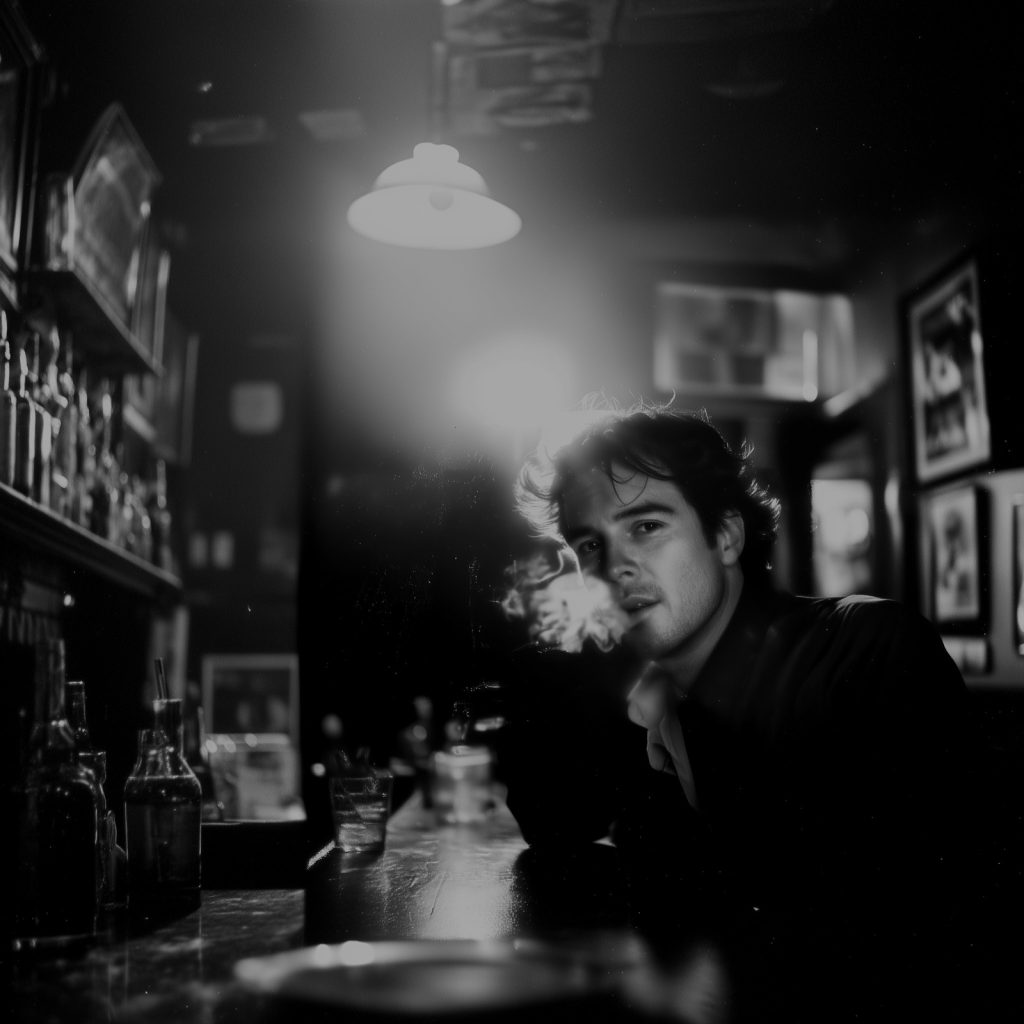
Jordi is a creative talent: an author, lyricist, photographer, and digital designer! His work dives into fascinating themes like obsession, memory, and atmospheric noir.
He has several independent titles published through In Nebula Lux, including the short story collection How to KILL (time), the lyrical prose album Sky Blue Skin, the novel BC, and his thrilling dark literary piece, The Silence on the Line. We can’t wait to chat with him about The Silence on the Line and his artistic journey.
Interview with Jordi Gaxiola
Norm: Let’s kick things off with the very first image in the book—the bed sheet taped over a mirror.
That’s such an intriguing detail! Where did that idea come from?
Was it inspired by an old superstition, or did you come up with it entirely on your own? Once you had that detail, how did the killer’s “signature” evolve?

Jordi: The image began with something very specific: the killer does not want to see his own reflection while committing the crime. I didn’t start from a superstition, but from that need to avoid seeing his own image.
What interested me was how an initially practical gesture could take on another meaning over time.
His signature does not arrive fully formed. It develops as he grows more confident and the sense of power becomes harder to control.
Some elements begin as in-the-moment decisions and gradually become rituals.
I would rather not explain the origin of each one, because discovering that progression is part of reading the book. Still, that movement from the accidental to the deliberate is essential.
Norm: You set the story in late 2001, right after 9/11, when dial-up modems, VHS tapes, and answering machines were all the rage.
What led you to choose that particular moment in time?
Do you think the story would have the same impact today with all our smartphones and social media, or does it thrive on that older, quieter vibe?
Jordi: I chose 2001 because it offered a particular combination: online communities that already had a life of their own, and a physical world that was much less extensively recorded than it is today.
A forum could bring together people obsessed with a case, while outside the screen, movements and encounters still happened that wouldn’t leave the same digital trail they might now.
I was also interested in the physical experience of that technology. Going online wasn’t a permanent condition. It was an action: you dialled the modem, the exchange of sounds took place, and you entered another space.
VHS tapes let someone record a news report, replay it, pause it, and search for something they missed. An answering machine preserved a voice on a physical object. Those things give the story a particular rhythm and texture.
Today, the investigation would have to be constructed differently, with phones, location data, and cameras playing a much larger role. I wasn’t thinking about 9/11 when I chose the year.
Once I realized the story would take place shortly afterwards, I built that context into the atmosphere: the collective fear and vulnerability of that moment.
Norm: The killer leaves old love songs in the victims’ homes, like “Only the Lonely” and “The Great Pretender,” and later even mixes in some country music.
How did you pick these songs? Do they hold any special meaning for you? Did you find yourself listening to them differently after writing the book?
Jordi: The songs have a personal connection to the killer, and I would rather let readers discover what that is. From there, I chose songs whose titles, lyrics, or atmosphere could add another layer to a scene.
The music isn’t there to establish a mood. It also participates in the story and shapes how the city interprets what is happening. The nickname The Pretender is one example.
The country music introduces an important variation in that pattern, but explaining why would reveal too much. What I can say is that music has always been central to my life.
Since I was very young, I’ve loved both the songs themselves and the equipment we listen to them on, and that finds its way into my writing.
Writing the book changed my relationship with some of those songs. With the Keith Whitley song, for instance, I can no longer entirely separate what I’m hearing from the scene I wrote. For me, it now carries that image.
Norm: Ethan Crane is such a captivating character—a burned-out copywriter who prefers chatting with strangers online to calling his own mom. What was your inspiration for him?
Is there a bit of you in his character? Did you always intend for him to be somewhat unreliable, with those blank stretches of time he struggles to recall?
Jordi: I don’t see Ethan as a reflection of myself. I built him as someone solitary, technologically capable, and unusually good at noticing details and finding patterns. He is more comfortable analyzing a case than connecting with the people in his own life.
The forum gives him a place where those abilities matter and where he can participate without facing the same difficulties he encounters away from the screen.
When I begin writing, I don’t necessarily have the ending worked out. I discover the story through the characters. With Ethan, his growing unreliability and the gaps in his experience developed alongside his obsession.
As the case takes up more space, his responsibilities and the rest of his life begin to fall out of focus. I would rather not explain those gaps too closely, because the uncertainty they create is an important part of the book.
Norm: The Frequency Files forum feels incredibly authentic, with a blend of quirky usernames and late-night theories. What inspired that? Did you spend time exploring online communities like that?
And where’s the Line between healthy curiosity about a crime and having an unhealthy obsession?
Jordi: I was interested in bringing people with very different motives into the same space. Some want to solve the case, some want to steer the conversation, and others are drawn to its darkness.
Anonymity gives them a sense of protection, as though anything said behind a username cannot have real consequences.
We can recognize that behavior on social media today. From behind a screen, it becomes very easy to accuse, judge, or damage the reputation of someone we have never met.
The forum combines that power with the belonging a community offers and the fascination of true crime. It also exists before these murders. What changes is the intensity it takes on as the case begins to absorb everything else.
The name The Frequency Files reflects the idea of tuning in, finding information in the noise, then collecting it and examining it together.
For me, the Line into obsession is crossed when that search begins to displace everyday life, and people lose sight of the consequences of what they are doing. Ethan takes that process further and further.
Norm: The two detectives, Mercer and Hale, have such different vibes—Mercer is the weary, quiet veteran, while Hale is the polished, camera-ready younger partner. Was one of them easier to write than the other?
Did you want readers to trust one more than the other right from the start?
Jordi: I wouldn’t say that one was easier to write than the other. I was interested in the contrast between their generations and their methods. Mercer represents a more traditional approach to investigation, grounded in experience and instinct. Hale has a different relationship with technology, public image, and the media.
They bring different abilities to the investigation. I was interested in how their methods complement each other and how their generational differences shape their approach to the same case.
Norm: One scene that really hits hard is when the police arrest Gideon Strayne, a widower in a wheelchair.
What made you include that moment? Were you reflecting on real-life cases of wrongful accusations?
What emotions did you want readers to experience when everyone, including the public, jumped to conclusions?
Jordi: I wasn’t drawing on a specific real-life case. I was interested in how someone becomes a suspect: the combination of a profile, a system’s results, and actions that seem to put a person in the path of an investigation.
In Strayne’s case, some of his own decisions also draw attention to him.
The question touches on a sensitive part of the plot, so I would rather not tell readers in advance what they should conclude about that arrest.
What mattered to me was showing how the suspicion takes shape, what it is built on, and the context in which it develops.
Norm: The media gives the killer the nickname “The Pretender,” and it really shifts the city’s energy.
How much of this was about the story itself, and how much was a commentary on how the press handles real crimes?
Do you think a catchy name helps make people feel safer, or does it just fuel the fear?
Jordi: I think the nickname increases the fear. It gives an unknown person a recognizable identity, puts him in everyone’s conversations, and lets fear grow with each report and discussion. Instead of making him more manageable, the name can make him even more present.
The Pretender comes from a song found at a crime scene.
The press takes that detail and turns it into the killer’s public identity.
I’m interested in the relationship between media coverage and our collective fascination with crime, and how we turn someone like that into a figure that occupies an entire city’s imagination.
He becomes a kind of local boogeyman, a threat that seems capable of reaching anyone.
Norm: At one point, Ethan decides to quit his job by wiping his work files clean and simply walking out.
To me, that felt both like a breakdown and a liberating act. What was your intention behind that moment?
Have you ever felt the urge to completely dismantle your routine?
Jordi: For me, that scene shows the real cost of his obsession. His job supports his life: it pays his rent, his expenses, and his mother’s care. By destroying it, he does more than shed a routine he finds exhausting.
He is jeopardizing the things that depend on him while the case and the forum absorb more and more of his attention.
I have felt the impulse to change direction myself. Many years ago, I made a significant decision in my professional life. I took the leap and didn’t look back.
I understand that impulse, but Ethan takes it to another extreme. Erasing other people’s work, as well as his own, is a way of burning his bridges, trying to make sure there is no route back.
The scene may feel liberating for a moment, but the cost remains.
Norm: Your novel gives readers several reasons to question what they think they know.
How did you balance clues and uncertainty, and what did you want readers to feel by the end?
Jordi: I wanted readers to be able to build a theory without ever feeling entirely comfortable inside it. Ethan is at the centre of that uncertainty.
We see his obsession, his memory lapses, the stretches of time he cannot account for, and how he interprets events, and all of that shapes our own reading of the case.
The clues are deliberate, but I would rather not confirm who they point to or explain how to read every gesture.
Part of the pleasure of a story like this is noticing a detail, giving it a meaning, and then wondering whether you understood it correctly.
The Frequency Files is conceived as two books: The Silence on the Line and its sequel and conclusion, Willow Arms, which is coming soon. I wanted the first book to leave readers with live questions and reasons to reconsider what they had read.
The intention was to sustain that tension.
Norm: As we wind up our interview, where can our readers find out more about you and The Silence on the Line?
Jordi: Readers can find more about me and my books at my WEBSITE and explore The Silence on the Line at HERE
The novel is available in English on Amazon in Kindle, paperback, and hardcover editions. Thank you, Norm, for the opportunity and for the attention you’ve given the book.
The novel is available in English on Amazon in Kindle, paperback, and hardcover editions. Thank you, Norm, for the opportunity and for the attention you’ve given the book.
Listen to an in-depth audio discussion of the book and review featured in this article, hosted by our virtual commentators Ken and Zoey on the Bookpleasures Deep Dive Podcast.